
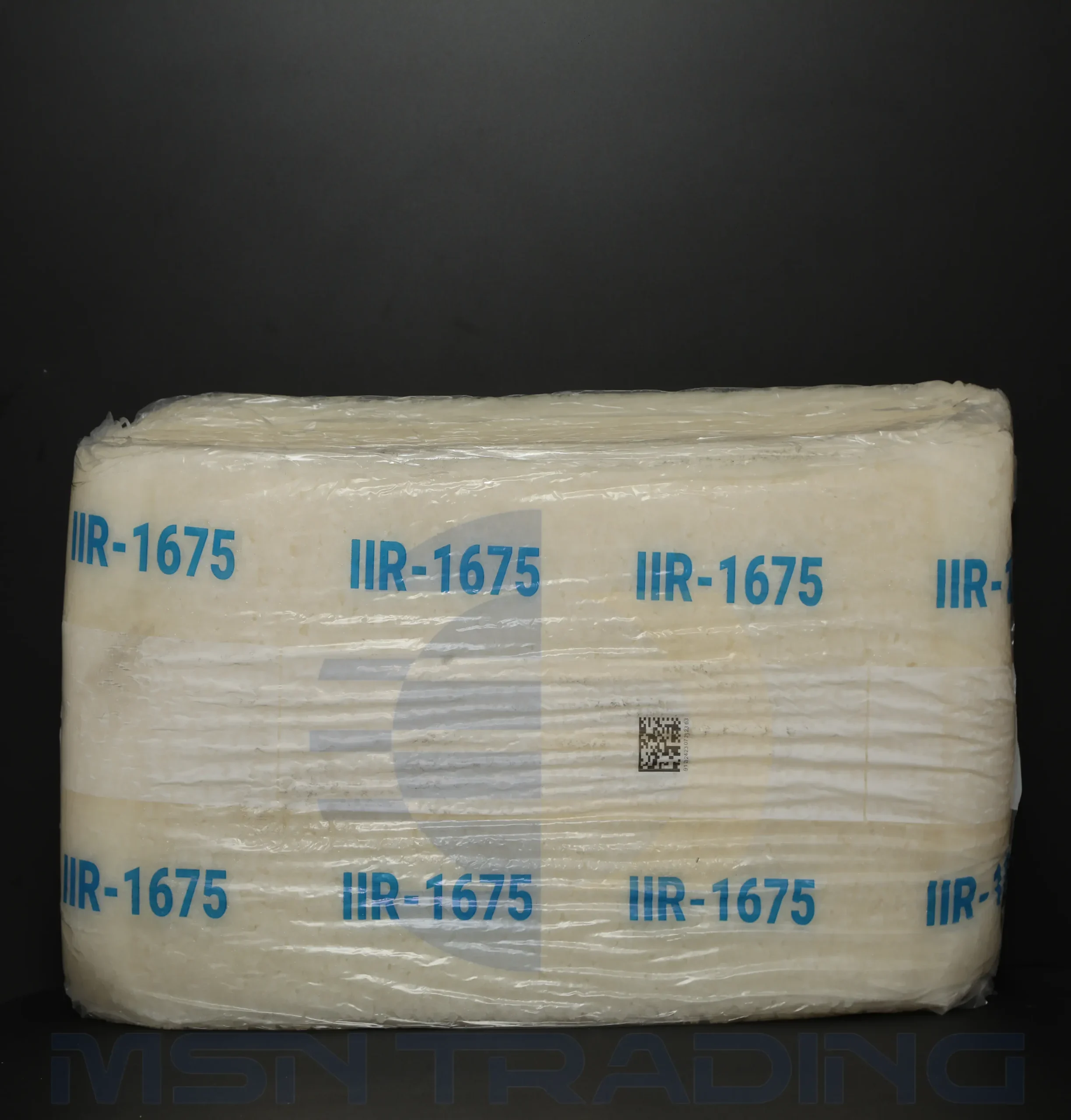
Description
Butyl Rubber
This copolymer is obtained through cationic addition polymerization of isobutylene (about 97%) and a small amount of isoprene (approximately 0.6% to 3%). Butyl rubber is known for its high stability.
Isobutylene has a very bulky molecular structure, which gives this rubber excellent resistance to gas permeability and good mechanical energy absorption (damping) properties.
Polymerization is carried out via cationic vinyl polymerization at a temperature of about −100°C. Because the reaction is extremely fast, such low temperatures and cooling are used to control the process.
This polymer was first produced in 1931 by the German company BASF. In 1937, American researchers further developed its curing methods and applications.
During the 1950s and 1960s, halogenated butyl rubbers were developed in brominated (bromo butyl) and chlorinated (chloro butyl) forms. These developments enabled improved curing systems and allowed co-vulcanization with other rubbers such as natural rubber and styrene-butadiene rubber.
Butyl rubber can also be used as a fuel additive, for example in diesel fuels, where it provides detergent-like properties and helps prevent deposits in injectors and engines.
Main types of Butyl Rubber:
Conventional butyl rubber
Halogenated (modified) butyl rubber, produced by reacting butyl rubber with bromine or chlorine (bromo butyl rubber)
Pre-crosslinked butyl rubber, which in its raw state has high resilience, high strength, and good resistance to flow, and is commonly used in gasket manufacturing
Reviews
There are no reviews yet.